
Yoga Day: Beyond Asanas and the Importance of Indian Languages

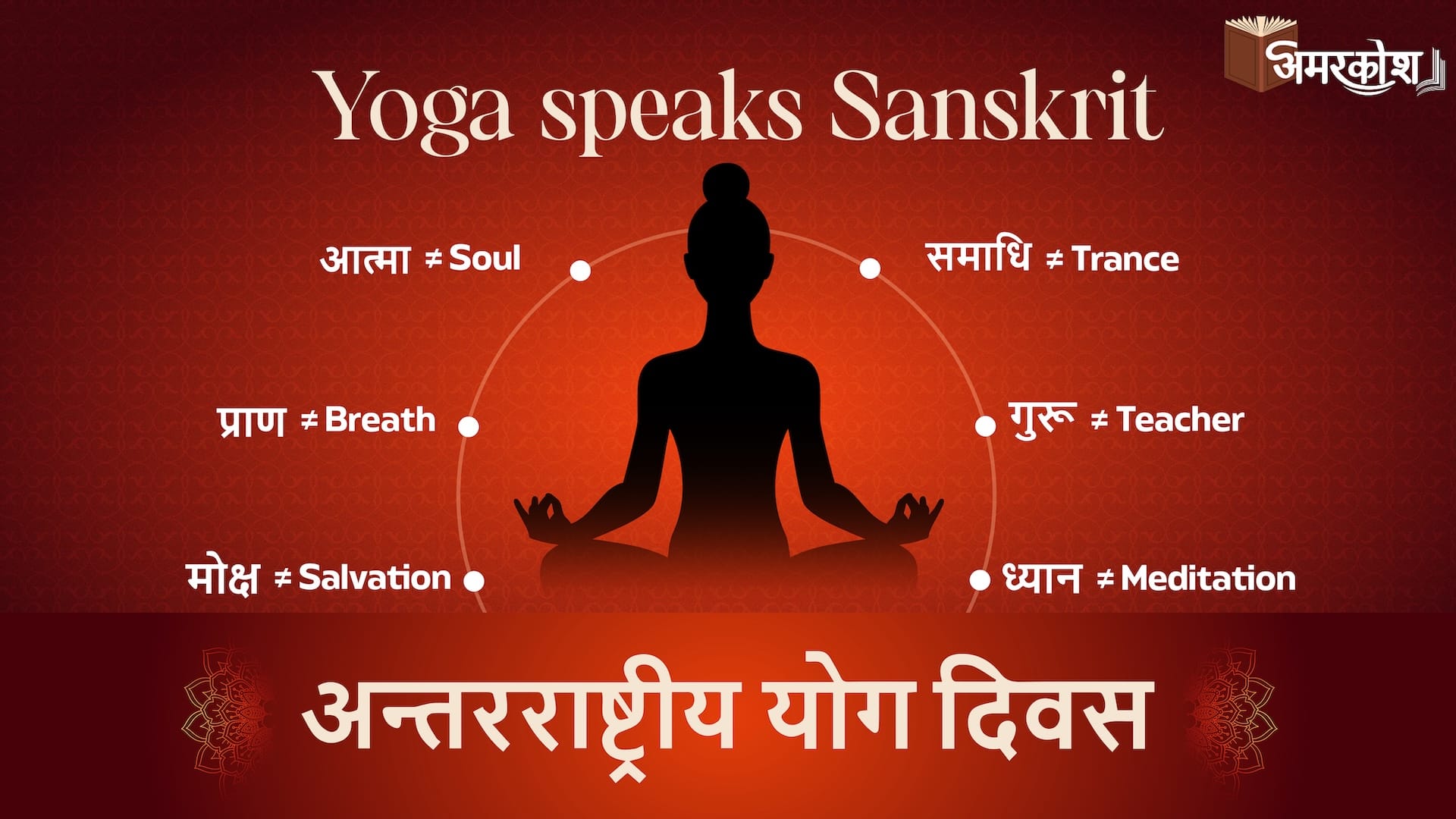
Yoga, isn't just a bunch of exercises, but a whole prescription for living life. It is an ancient practice rooted in Hindu philosophy. It has become perhaps India's biggest export because of its physical, mental, and spiritual benefits. While yoga is thought of as a discipline teaching physical postures (Asanas), it is much more than just exercise. Yoga is actually a way of life that integrates discipline, moderation, empathy, mindfulness, and inner harmony.
International Yoga Day, celebrated on June 21st, highlights this all-encompassing tradition, encouraging people worldwide to embrace its holistic approach. This does beg the question: why 21st June? What is yoga other than physical exercises to improve flexibility, strength and lean muscle mass? Also, what does yoga have to do with learning Indian languages? Let us dive into the origins of yoga, explore its philosophical foundations, and the linguistic nuances often lost in translation.
Why June 21st for Yoga Day?
The United Nations declared June 21st as International Yoga Day in 2014. This followed a proposal by India’s Prime Minister, Narendra Modi. This date is significant as it marks the summer solstice, the longest day of the year in the Northern Hemisphere. The day symbolizes light, energy, and transformation. In yogic traditions as well, the solstice is a powerful time for spiritual practices. The ancients believed that the earth’s energy is at its peak during this time. Also, Adiyogi (Lord Shiva), thought of as the first yogi, is said to have begun transmitting the knowledge of yoga to the Saptarishis (seven sages) on this day.
The day is symbolic in the way that it represents yogic wisdom. Anyone interested in learning about yoga can benefit from also learning an Indian language to fully understand how the date connects ancient tradition to modern lifestyles. An experienced, knowledgeable online Hindi tutor can explain how this global observance reinforces yoga’s timeless relevance.
Yoga is More Than Just Asanas
Many people equate yoga with physical postures, but Asanas are just one part of Ashtanga Yoga (literally the eight limbs), as outlined by Maharishi Patanjali in the Yoga Sutras. Patanjali’s 8 Limbs of Yoga, provide a structured path to self-realization. They speak about ethical living, mental discipline, and spiritual awakening. These limbs are divided into two categories: "things you do" (active practices) and "things that happen to you" (states of being that arise from that practice). Together, they are a prescription for living a healthier, happier and more harmonious life. The physical and spiritual components help not just the physical body, but also our emotional well-being and our very soul.
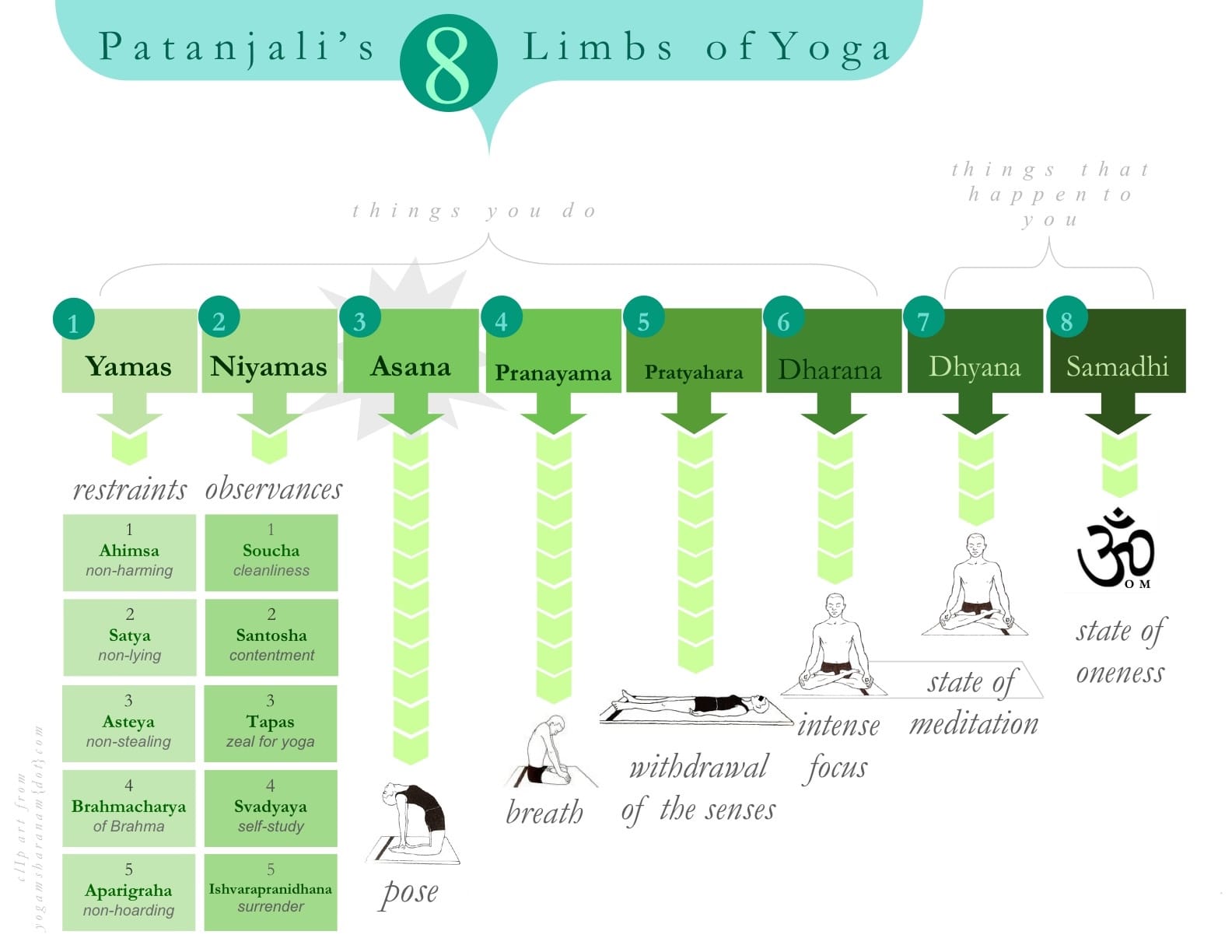
The Eight Limbs Explained
Yamas (यम - Restraints)
The Yamas are ethical guidelines for interacting with the world:
- Ahimsa meaning nonviolence: Teaches us not to harm others and to cultivate compassion
- Satya meaning truth: Teaches us to be truthful in thought, speech, and action.
- Asteya meaning non-stealing: Teaches us to not steal and also to respect others' resources, including ideas, time and energy.
- Brahmacharya or the path of Brahman: This teaches us moderation, restraint and control over desires; as mindful use of energy.
- Aparigraha or detachment: This teaches us to let go of things, to resist hoarding, and to embrace simplicity.
Niyamas (नियम - Observances)
The Niyamas (literally meaning rules) are personal directives for hygiene and self-growth:
- Soucha meaning defecation: This speaks about the cleanliness of body and mind.
- Santosha means contentment: It talks about finding joy in the present.
- Tapas can mean austerity, meditation, concentration : This speaks of a zeal for yoga and for cultivating discipline in life generally.
- Svadyaya literally means self-study: It tells us about the importance of self improvement and of reflecting on sacred texts.
- Ishvarapanidhana means surrender to god or to a higher power: It tells us about the vital importance of humility.
Asana (आसन - Physical Postures)
Asanas or the physical positions are meant to prepare the body for meditation. They do this by building strength and flexibility, and teaching us how to be still. While modern yoga tends to focus on the physicality, Patanjali's directives guide us toward holistic improvements via these deeper practices.
Pranayama (प्राणायाम - Breath Control)
Pran means life, literally, and the term prayanama is a compound word (something that a Sanskrit tutor can best explain the importance of) meaning control or regulation of the breath (life force). This yogic pracitice calms the mind and energizes the body. Techniques like Nadi Shodhana (alternate nostril breathing) help to balance the nervous system, it is thought.
Pratyahara (प्रत्याहार - Withdrawal of the Senses)
This branch of Patanjali's writings teaches us detachment from external distractions. It tells us who to turn attention inward— a crucial step for meditation.
Dharana (धारणा - Focused Concentration)
This again, is a vital aspect of meditation: here, the practitioner trains the mind to focus on a single point: it could be one's own breath, a mantra, a fixed point that one looks at.
Dhyana (ध्यान - Meditative Absorption)
Whereas the abovementioned Dharana’s refers to single-pointed focus, Dhyana is a flow of uninterrupted awareness. The aim is for the meditator and object to be able to merge. These are progressive steps that culminate in the ultimate goal of smadhi.
Samadhi (समाधि - Oneness)
This us tge ultimate goal: a state of blissful unity with universal consciousness, beyond the ego. We often hear of sages and other advanced beings who willingly and conciously give up their mortal body - we speak of them as having "attained samadhi".
The Holistic Path
Focusing only on the Asanas of yoga is like missing the forest for the trees. The Yamas and Niyamas root us in ethical living, while Pranayama and Pratyahara bridge the physical and mental realms. Dharana, Dhyana, and Samadhi lead to transcendent awareness. So, by following the principles laid down in each of the eight limbs, we transform yoga from an exercise into a journey of self-discovery and self-improvement.
As a modern practitioner of yoga, you can start small:
- Follow the principles of Ahimsa or nonviolence by being kind to yourself and others.
- Do Pranayama or Dhyana for just five minutes a day to see real changes to your emotional wellbeing.
- Become mindful of your thoughts and actions by reflecting on Svadyaya through journaling or scripture study - with or without the help of a teacher.
Patanjali’s system rather like a timeless roadmap, that gives us the tools for inner peace in today's chaotic world. Whether you’re a beginner or advanced yogi, embrace the eight directives in their entirity to unlock yoga’s profound potential—for your body, emotions and for your spiritual growthsoul.
The Four Paths of Yoga: A Deeper Exploration
As we have seen above, yoga isn't a monolithic practice but a set of spiritual guidelines that offer multiple pathways to self-realization. This set of guidelines recognises that individuals have different temperaments and inclinations and that they could have very different experiences and circumstances. This is why, ancient yogic wisdom prescribes four primary paths of yoga—each providing a unique and workable approach to enlightenment. These paths are:
Gyana Yoga (ज्ञानयोग) – The Path of Wisdom
Gyana Yoga is the yoga of knowledge and discernment. Gyana, literally meaning knowledge or information, is a form of yoga ideal for those with an intellectual and analytical nature. You can use self-inquiry (Atma Vichara) and deep contemplation to dissolve illusions (Maya) and realize the ultimate truth (Brahman) of the world. You can do this by yourself or by using the services of a personalised language tutor:
- You can study the ancient sacred texts like the Upanishads and Bhagavad Gita
- Try reflecting on profound questions like "Who am I?" (as taught by sage Ramana Maharshi)
- Learn to distinguishing between the eternal (Self) and the transient (world)
If you are someone with an intellectual bent of mind, a sense of detachment, and just a willingness to confront the truth, this is the path for you.
Bhakti Yoga (भक्तियोग) – The Path of Devotion
Bhakti Yoga is the yoga of love and surrender. The word bhakti means devotion or worship and this is the right approach for those among us who are emotional and deeply loving. Bhakti yoga helps in cultivating unconditional love for the Divine. It is helps us seek out a personal God (Ishvara); immerses us in a universal consciousness. Practices include:
- Kirtan (devotional singing), Japa (chanting of certain mantras)
- Rituals related to worship, prayer, and being able to see the Divine in all beings
- Repeatedly intoning sacred names like "Hare Krishna" or "Om Namah Shivaya"
With the help of this path of yoga, you transform your emotions into spiritual fuel and replace the ego with divine love. And the first step on this path may well be learning Hindi or some other Indian language from a qualified tutor.
Karma Yoga (कर्मयोग) – The Path of Selfless Action
Karma Yoga is the yoga of right action without attachment. For instance, Lord Krishna famously told Arjun on the battlefield to do his duty without worrying about the consequences. If you are someone who enjoys public service or finds joy in helping others, this may be the path for you. This will help you realise that acting selflessly is actually a form of worship. Key principles include:
- Acting without expectation of rewards or prise (Nishkama Karma)
- Performing every task as though it were an offering to the Divine
- Viewing in success and failure as the same, without recrimination or regret
Hatha Yoga (हठयोग) – The Path of Physical Mastery
Hatha Yoga is the yoga of physical discipline, which we generally understand as yoga today. Hatha literally means force. This form of yoga helps strengthen the mind and body; helps the individual meditate effectively. It includes:
- Asanas (stretches, positions and postures) to strengthen the body and improve balance
- Pranayama (breath control) to regulate life force (Prana) and improve circulation
- Shatkarmas (cleansing techniques) for internal purification such as Neti, Dhauti, Nauli, Basti, Kapalabhati and Trataka
Modern yoga styles (Vinyasa, Iyengar) stem from Hatha, but its true purpose is to awaken Kundalini energy for spiritual evolution, and some haṭha yoga techniques date back to the 1st-century CE.
Choosing Your Path (Or Blending Them)
The yogic paths are not linear. Rather they overlap, crisscross and ocassionally blend one into another. For instance:
- A Gyana Yogi may use Bhakti (devotion to wisdom) or Karma Yoga (selfless study).
- A Karma Yogi might perform Bhakti (seeing service as worship) or Hatha (maintaining health for service).
The Bhagavad Gita (Chapter 6) speaks about Yoga as "skill in action." Whichever path you choose: knowledge, love, action, or discipline, the goal remains the same—union with the Divine.
Each path leads to the same goal—self-realization—but through different means. While the tenets are descriptive, they still allow individuals to choose an approach that resonates with their nature.
Lost in Translation: The Challenge of Sanskrit Terms
Many Sanskrit words used in yoga do not have exact English equivalents, leading to oversimplifications. Words like "Prana" (life force), "Dhyana" (meditation), and "Samadhi" (blissful union) don't just have literal meanings, but also carry deep cultural significances and have philosophical contexts as well. Sometimes, a lot is lost in the translation. For example:
- "Asana" (आसन) is not just a "pose" but a steady and comfortable posture designed for prolonged meditation. It also means a seat or a special place for sitting
- "Om" (ॐ) is not merely a chant but rather like a musicle note of the cosmos, a vibration that is like the essence of creation.
- "Guru" (गुरू) actually means "dispeller of darkness," not just a teacher.
This linguistic gap can sometimes lead to a superficial understanding of yoga. A true student of yoga should ideally study it in its original language from a good Sanskrit teacher.
A video series on Sanskrit non-translatable words
How Learning an Indian Language Enhances Yoga Practice
Understanding Sanskrit, Hindi, Telugu or other Indian languages can deepen one’s yoga journey because:
- Original texts like the Yoga Sutras, Bhagavad Gita, and Hatha Yoga Pradipika were written in Sanskrit, and translations into non-Indian languages often miss nuance and context.
- Mantras and chants derive their power from precise pronunciation and the vibrations they produce. So it is better to try and pronouce them as acurately as possible.
- Subtle concepts like "Chakras" (energy centers) and "Nadis" (energy channels) do not really have exact English equivalents. A yoga student would grasp these better if studied in their linguistic and cultural context.
By learning an Indian language, even a non-Indian individual can access authentic teachings and avoid misinterpretations. A would-be yogi will connect more deeply with yoga’s roots, enriching their practice beyond physical postures.

Find tutors to learn Indian languages
Conclusion: Yoga as a Way of Life
Yoga is a holistic set of guidelines that seek to harmonize the body, mind, and soul, while helping people find self-mastery and inner peace. It is among the best gifts to the world from Hindu heritage; from an ancient civilization. While International Yoga Day helps spread awareness, truly becoming a yogi is a more complex pursuit. It goes beyond a single day or physical practice—it is a lifelong journey of growth and self-awareness. You can explore its philosophical depths, and embrace its diverse paths in ways that is truly authentic to you. At the same time, you can learn one or more Indian languages to experience yoga in its fullest, most transformative form. Whether through movement, meditation, devotion, or knowledge, yoga invites us to awaken our highest potential.
ॐ तत् सत्
(Om Tat Sat – All That Is Truth)
