When Shiva Opened His Third Eye for Tamil: Rediscovering the Soul of Tamil Sangam

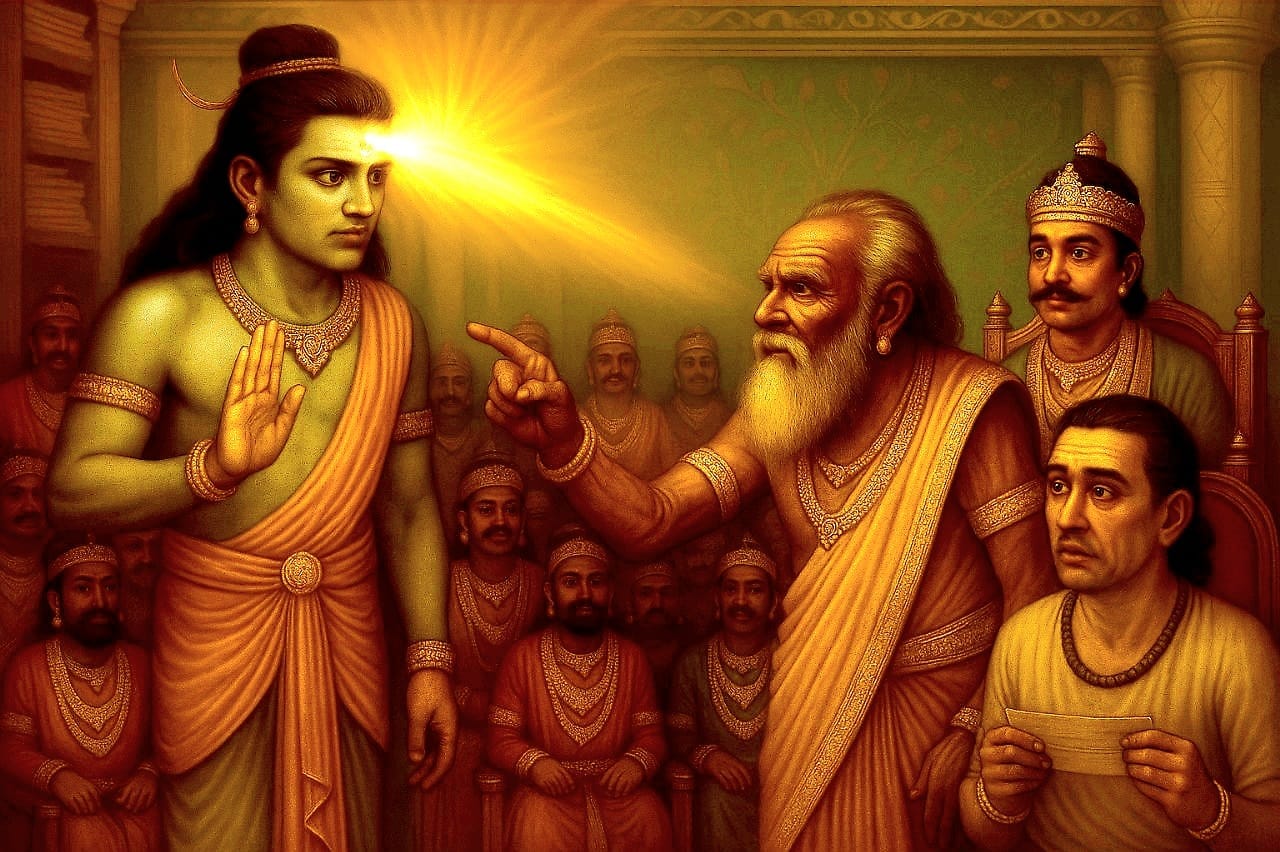
Even if the third eye opens, a mistake is still a mistake. - Nakkeerar
நெற்றிக்கண் திறப்பினும், குற்றம் குற்றமே! - நக்கீரர்
The Third Eye Opens: The Power of Literary Truth
In the ancient Pandya kingdom, in Madurai, the Third Tamil Sangam convened in all its scholarly glory. Here, poets debated and refined their verses before they could be immortalized. During one such event, a poet submitted a verse that claimed: a woman’s hair had natural fragrance from birth.
This poem was defended by a mysterious figure, none other than Lord Shiva in disguise.
But Nakkeerar, a respected poet and chief of the Sangam, challenged the line, arguing that no human, divine or otherwise could possess natural fragrance without external sources.
Shiva, furious that a mortal dared to correct him, opened his third eye to burn Nakkeerar. Yet Nakkeerar stood on his ground. “Even if you are Lord Shiva,” he said, “I cannot accept falsehood in poetry.”
“நெற்றிக்கண் திறப்பினும், குற்றம் குற்றமே!
Netrikkan thirappinum kutram, kutrame!”
“Even if the third eye opens, a mistake is still a mistake!”
This wasn’t arrogance. It was the embodiment of Tamil’s moral clarity, the fearless pursuit of truth and the supreme value placed on intellectual honesty. A poetic reminder that truth must stand tall, even in the face of divine fury!
The Three Tamil Sangams: Pillars of an Ancient Civilization
Tamil’s literary history is not just vast. It’s sacred!
1. First Sangam (Mudhal Sangam): முதல் சங்கம்
Held in a sunken land called Kumari Kandam; believed to have lasted for 4,400 years.
Attended by gods, sages, and kings. All the works were tragically lost to the sea.
2. Second Sangam (Idai Sangam): இடைச்சங்கம்
Held in Kapata Puram, another ancient city swallowed by time. Only fragments of its brilliance survived.
3. Third Sangam (Kadai Sangam): கடைச்சங்கம்
It was convened in Madurai under the Pandya dynasty.
Produced legendary works like Thirukkural, Silappatikaram, Manimegalai, and more.
These Sangams weren’t mere literary festivals. They were civilizational sanctuaries, preserving not only the Tamil language but also its spiritual, ethical, and artistic essence.
The Ancient Science of Tamil Literature
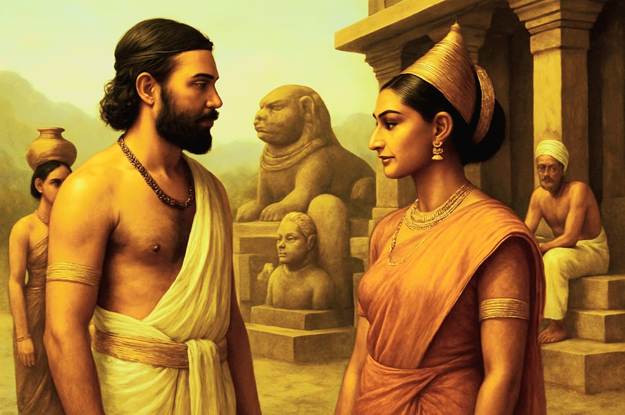
Tamil isn't just poetic; it's scientific and philosophical.
The grammar system: Tholkappiyam (தொல்காப்பியம் ) predates many modern linguistic theories. It delves into phonology, sentence structure, human behavior, and socio-emotional expressions.
Tamil classifies poetry into:
Akam (அகம்): Interior, emotional, romantic.
Puram (புறம்): Exterior, heroic, communal.
This binary framework laid the foundation for storytelling structures still admired in today’s literary and cinematic traditions. Every Tamil word is treated like an element in a formula, capable of forming stunning compound meanings through thoughtful arrangement.
Teaching Tamil in the Spirit of Sangam: The Amarkosh Way
At Amarkosh, we don’t just teach Tamil. We reawaken it!
Inspired by Sangam values, our learning philosophy is:
Meaningful Expression
Students learn to speak with intention and poetic rhythm.
Roleplay & Storytelling
Through characters like Nakkeerar, Avvaiyar, and Murugan, students act out emotionally resonant scenes.
Ancient Meets Modern
Classics and proverbs are contextualized with current topics, from school life to climate awareness.
Creative Writing with Soul
Children write their own poems and even attempt Kural-style couplets, discovering personal meaning through form.
Our mission is to return Tamil to its rightful place in every learner’s heart. Not just as a subject, but as a soul companion. Find a Tamil tutor that meets your budget and schedule to start learning this beautiful language.
Language, Identity & Soul: Beyond the Alphabet
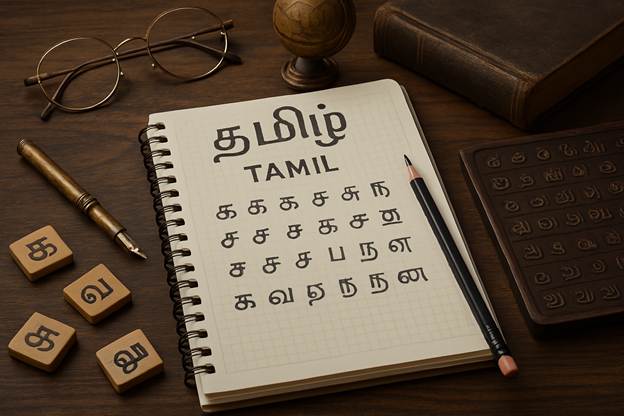
Tamil is more than communication. It is identity. emotion. Energy!
When a child says “Amma”, they echo generations. Words like “Anbu” and “Aram” carry millennia of emotional, cultural, and ethical weight.
Learning Tamil helps children:
Develop Emotional Intelligence
Tamil literature teaches ethical reasoning, emotional awareness, and moral courage.
Spark Creativity
Kids craft metaphors, rhymes, and songs, the same tools Sangam poets used.
Reclaim Cultural Roots
Diaspora learners connect deeply with heritage, grandparents, and spiritual rituals.
Find Spiritual Peace
Whether through Thevaram or Thiruppavai, the melodic depth of Tamil offers a meditative, grounding experience.
How Modern Learners Relate to Ancient Tamil Worship
In Sangam times, Tamil was worshipped as goddess, as philosophy, as mother.
That spirit is alive today:
A child saying “Vanakkam” in Canada is a member of the Fourth Sangam.
A teenager writing Tamil poetry in London becomes a modern Kabilar.
A grandmother sharing Aathichudi in New Jersey becomes Avvaiyar reborn.
Every act of learning, speaking, and preserving Tamil is an act of cultural worship. A continuation of the ancient Sangam fire.
Why Learning Tamil Still Matters
In a multilingual world, Tamil holds unique gifts:
Depth of Thinking: Its structure sharpens logic and emotional precision.
Ancestral DNA: Tamil carries the lived experiences of generations! From lullabies to war cries.
Aesthetic Brilliance: Rich in metaphor and rhythm, Tamil is art in motion.
Living Scripture: Its texts offer wisdom on ethics, relationships, and the cosmos.
Global Relevance: Tamil is recognized in Singapore, Sri Lanka, Malaysia, and by UNESCO. A language of both tradition and diplomacy.
To learn Tamil is to reclaim your roots, ignite your imagination, and align with a deeper part of your being.
The Eternal Flame of Tamil Wisdom
The Sangam poets didn’t write for fame. They wrote to keep truth and virtue alive.
When Nakkeerar (நக்கீரர்) challenged Lord Shiva, he wasn’t disrespectful. He was upholding dharma.
We, too, are part of this lineage.
Let us become guardians of this sacred language.
Let every home become a mini-Sangam.
Let every student carry the torch of truth, identity, and creativity.
Because when you speak Tamil, you don’t just speak. You echo eternity.
 Vishalakshi Arthanarisamy
Gods Who Spoke Tamil: A Divine Tongue
The Tamil people don’t just believe in their language! They believe their "gods spoke it first".
In Sangam literature and Tamil devotional hymns, Lord Shiva is not just a deity but a poet, composing verses like “Thiruvachagam” through his devotees. Murugan, the god of youth and wisdom, is known as “Tamil Kadavul (தமிழ் கடவுள்)”: the God of Tamil.
The Sangam era wasn't shy in crowning divinity with the Tamil tongue. This gave the language more than literary power, it made it sacred.
When we teach Tamil, we’re not just teaching a language.
We are teaching the language of gods, sages, and saints.
This divine connection still resonates when a child chants a Thirukkural (திருக்குறள் ) echoing a lineage of spiritual speech.
Tamil in the Digital Age: Reclaiming Roots Online

Some may say Tamil is ancient. But that doesn't mean it must stay buried in the past.
In the digital age, Tamil is finding new wings:
- Tamil podcasts retell Sangam stories in bite-sized brilliance.
- Children on YouTube recite Kural with animation and rhythm.
- Online classrooms connect the Tamil diaspora from Toronto to Tirunelveli.
Through Amarkosh, I use technology not to replace tradition, but to revive and reframe it.
My students don't just memorize Tamil, they:
- Create Tamil stories with modern characters.
- Perform live skits where Murugan speaks Zoom Tamil!
- Build vocabulary through role-play games, memes, and comics.
In this way, technology becomes a temple of learning, where the past meets the future, in Tamil!
