Keezhadi: When the soil Spoke Tamil

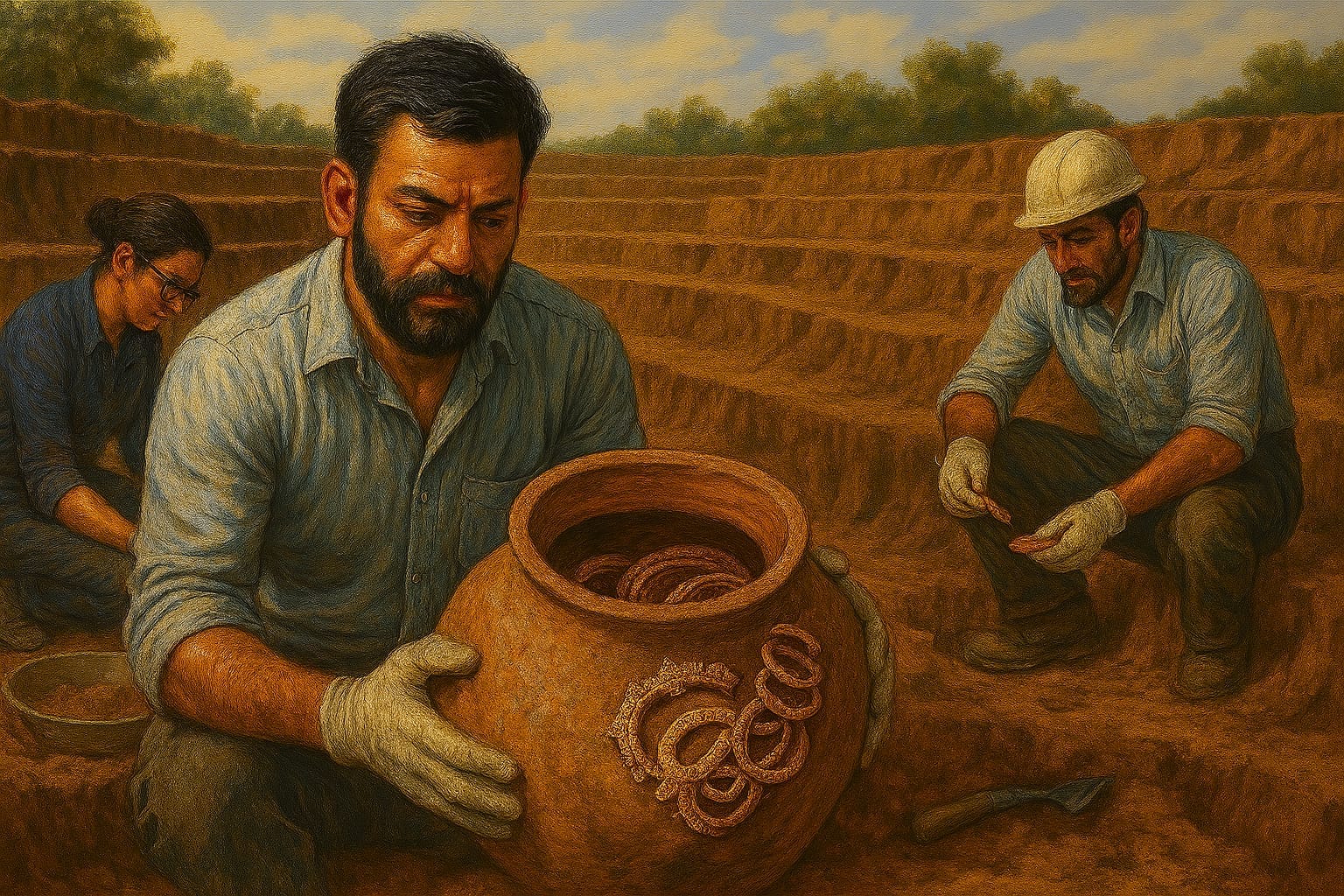
Far beneath the surface of a quiet village in Tamil Nadu, the ground gave way to something extraordinary. No, not gold. Not monuments. But something more powerful: proof. Proof that Tamil was once not just spoken, but lived, celebrated, carved, and etched into the very fabric of a brilliant ancient civilization.
Welcome to Keezhadi (கீழடி)! A humble name for what might be one of the most powerful archaeological discoveries in modern Bharat. This isn’t a typical excavation story. This is the story of how the soil remembered a language even when the world forgot. And how learning that language today isn't just useful; it's revolutionary.
The Discovery That Changed the Tamil Narrative
In 2014, a team of archaeologists began digging near the village of Keezhadi in Sivaganga district. What they found would flip every dry textbook version of Indian history on its head.
Out came finely crafted pottery with Tamil script. Brick walls laid out in geometric precision. Underground drainage. tools, ornaments, spindle whorls, beads, iron nails. Everyday items. Evidence not of kings and conquerors, but of a sophisticated urban Tamil society which was literate, clean, cultured, and global.
The Keezhadi settlement dates back to the Sangam Age, more than 2,600 years ago. That’s not just old; it’s ancient. Older than many widely known world civilizations. And it tells us one thing loudly: Tamil was not a side story in Indian history. It was a headline.
Why Keezhadi Isn’t Just a Site
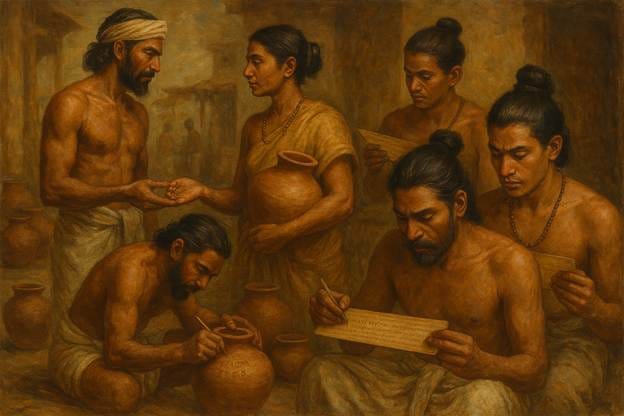
So, what makes Keezhadi so special? After all, archaeological digs happen around the world. But Keezhadi excavation didn’t just reveal objects. It revealed a cultural mindset!
- Education: The presence of Tamil script on everyday objects suggests literacy was not elite; it was common.
- Equality: Unlike other sites dominated by royal structures, Keezhadi shows a people centered civilization.
- Trade: Items from far off regions show that ancient Tamils were traders, thinkers, and makers.
- Urban Planning: With their drainage systems and town-like layouts, these weren’t mere villages. They were early cities.
For modern Tamil learners, this is a powerful revelation. You’re not learning a "regional" language. You’re reviving the voice of one of the world’s oldest, most advanced cultures.
Tamil Civilization: More Than Just a Region
To understand the magnitude of Keezhadi, we must look at the larger Tamil civilization it belonged to. Tamilakam (தமிழகம்) is the ancient Tamil homeland. It was not a small kingdom hidden in the southern tip of India. It was a vast and influential civilization, known across Asia and even parts of the Mediterranean world.
Tamilakam was home to three crowned kings known as the "Moovendar (மூவேந்தர்)":
- Chera (modern-day Kerala and western Tamil Nadu): Famous for trade and spice routes.
- Chola (central and northern Tamil Nadu): Renowned for naval dominance, temple architecture, and administrative brilliance.
- Pandya (southern Tamil Nadu): Celebrated for literature, education, and diplomacy.
These kings didn’t just rule, they connected. Tamil merchants traded with Rome, Greece, China, and Southeast Asia. Roman coins, amphorae, and references in Greco-Roman literature show that the world came to Tamil ports to trade gold for pearls, spices, textiles, and wisdom.
The Golden Age of the Cholas
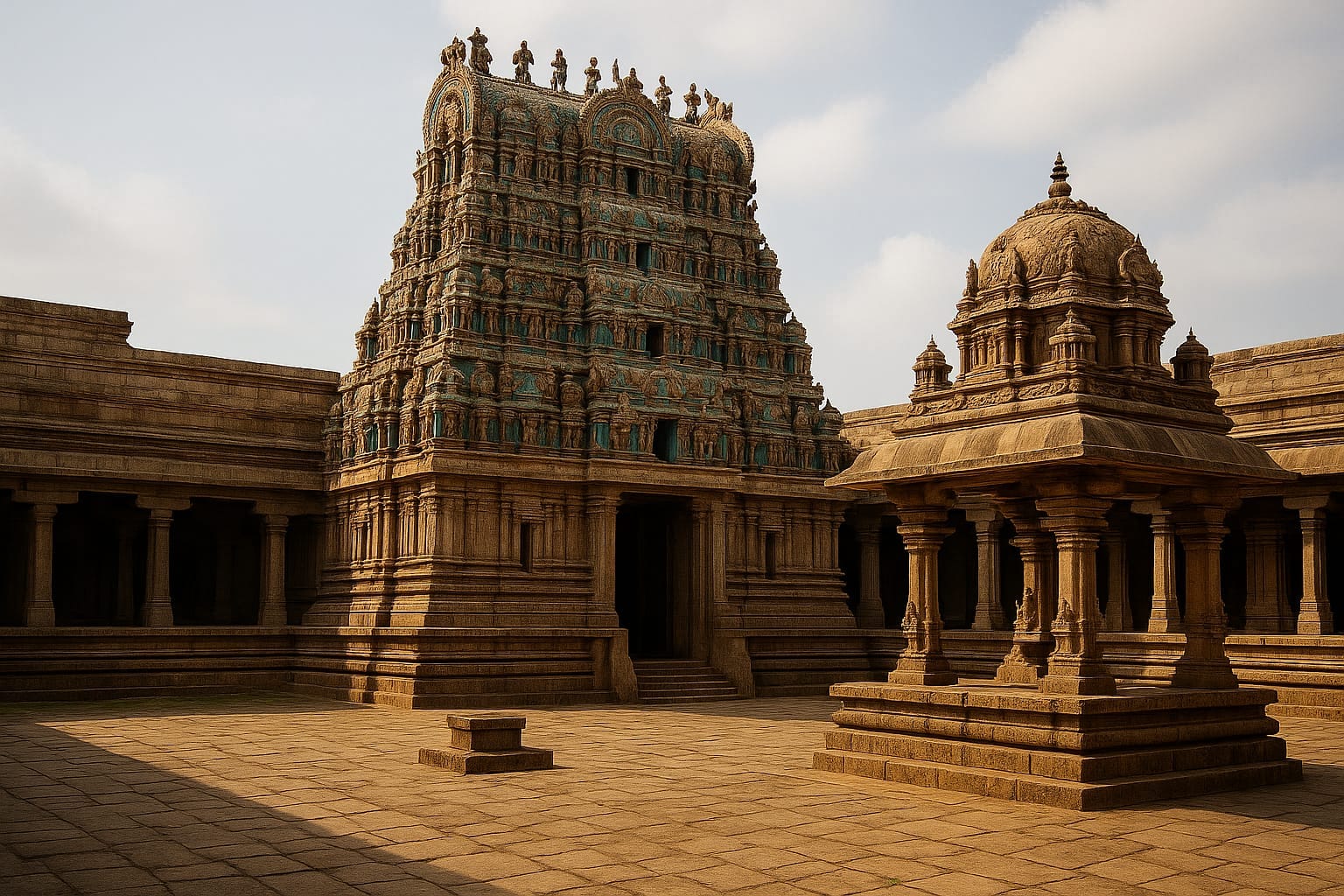
If Keezhadi whispered of early civilization, the Chola Empire roared of grandeur. Ruling from the 9th to 13th centuries CE, the Cholas were more than just kings! They were visionary rulers, engineers, artists, and global thinkers.
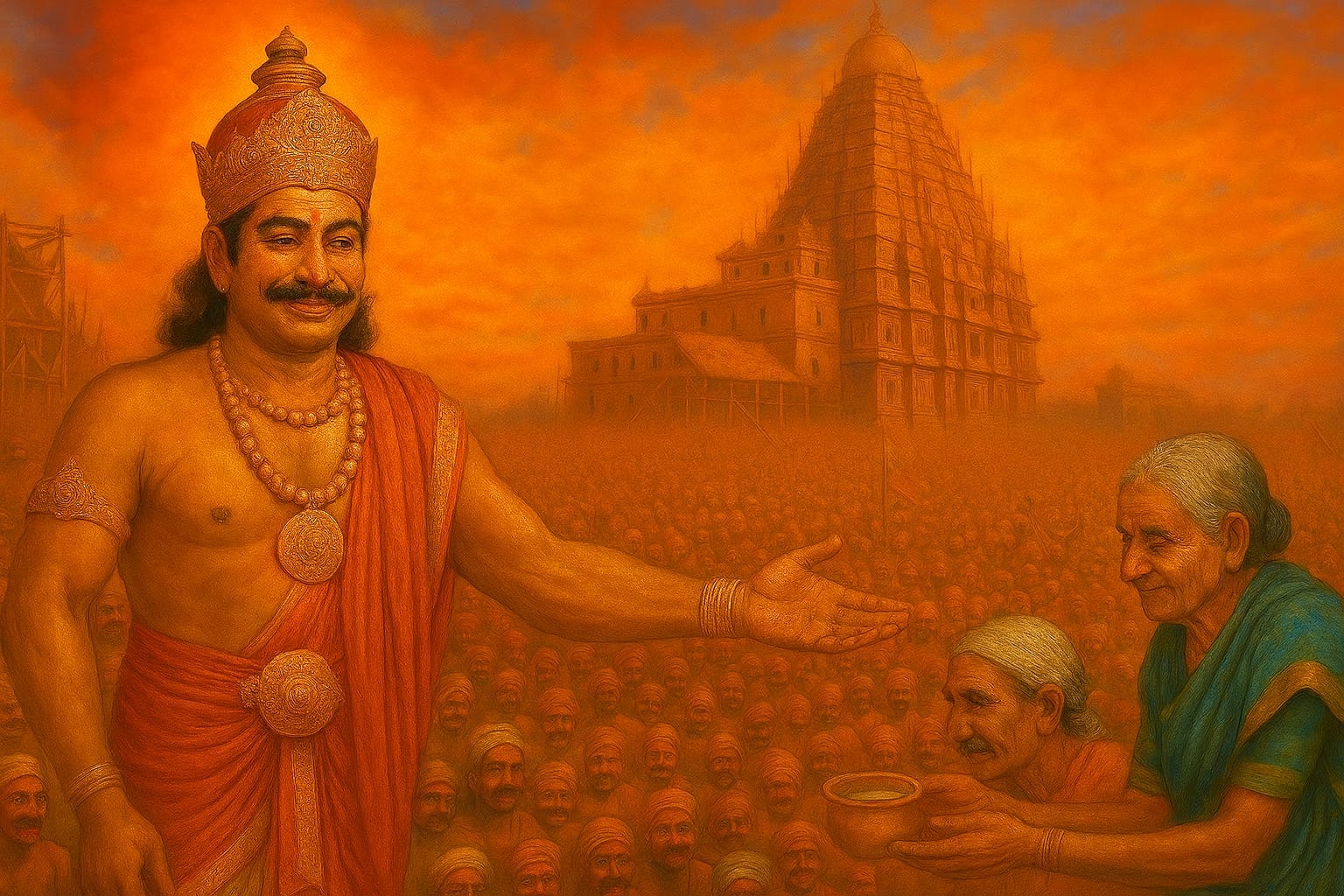
- Raja Raja Chola I and his son Rajendra Chola I expanded Tamil influence across Sri Lanka, Maldives, Malaysia, and Indonesia.
- The Chola Navy was one of the strongest maritime forces of its time.
- The Brihadeeswarar Temple in Thanjavur is not just a UNESCO World Heritage site. It is an architectural marvel still standing after 1,000 years.
- The Cholas established efficient governance, water management systems, and a strong justice system.
They weren’t just rulers. They were builders of a society where language, culture, art, and law flourished side by side.
Tamil: A Living Language Born of Ancient Soil
If you close your eyes and listen hard enough, Keezhadi speaks. Its silence is loud. Its artifacts whisper in ancient Tamil.
Learning Tamil, then, isn’t just about communication. It’s about belonging. It's about identity. When you say your first sentence in Tamil, you're not just speaking; you're echoing voices from thousands of years ago.
Imagine the impact on a child growing up outside Tamil Nadu. They might struggle to connect with the language. It feels distant, formal, "only spoken at home" But Keezhadi gives that child an anchor. A reason. A pride.
Because when you learn Tamil, you're not just joining a classroom. You're joining a civilization.
 Vishalakshi Arthanarisamy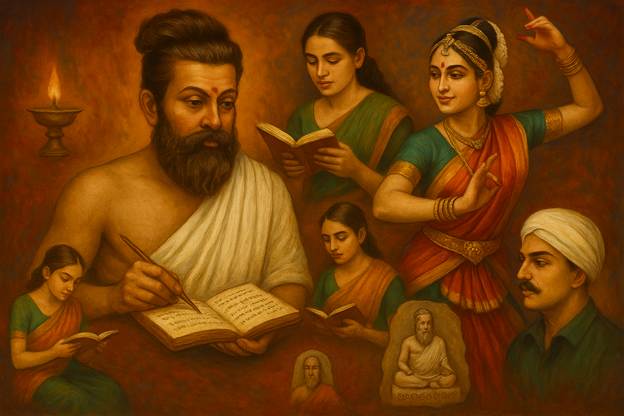
From Soil to App: How Amarkosh is Bridging the Gap
This is where modern tools come in. The spirit of Keezhadi must not be trapped in museums and papers. It must live in homes, hearts, and screens.
Amarkosh is a platform that brings this spirit alive. It’s not about rote learning. It’s about reconnecting.
Here’s how Amarkosh tutors make Tamil learning meaningful:
- Conversational Approach: Forget stiff textbook lines. You learn Tamil by speaking it in fun, real-life ways.
- Cultural Context: Every lesson isn’t just a language lesson; it’s a window into Tamil customs, festivals, values, and yes, ancient pride!
- Kid-Friendly Content: Designed especially for young learners, it makes Tamil feel like a game, not a grind.
- Parent Participation: Amarkosh encourages families to learn together, making language a shared journey.
Just as Keezhadi brought ancient stories to light, Amarkosh brings them to life.
The Emotional Power of Learning Tamil
Learning Tamil today is more than a skill. It’s an emotional rebellion against cultural erasure. Every time a child says "Amma (அம்மா)" proudly, a piece of Keezhadi breathes.
In a world where global languages dominate, learning Tamil is a choice to preserve identity. To honor ancestors. To let the soil speak through our tongues.
And there’s more.
- Tamil is still the only classical language that continues to live and breathe in the modern world.
- Tamil literature spans over 2,000 years, from Sangam poetry to modern novels.
- Tamil people have carried their language across continents to Malaysia, Singapore, Sri Lanka, South Africa, and the global diaspora.
Learning Tamil is not looking back. It is carrying forward.
You Are Part of the Story
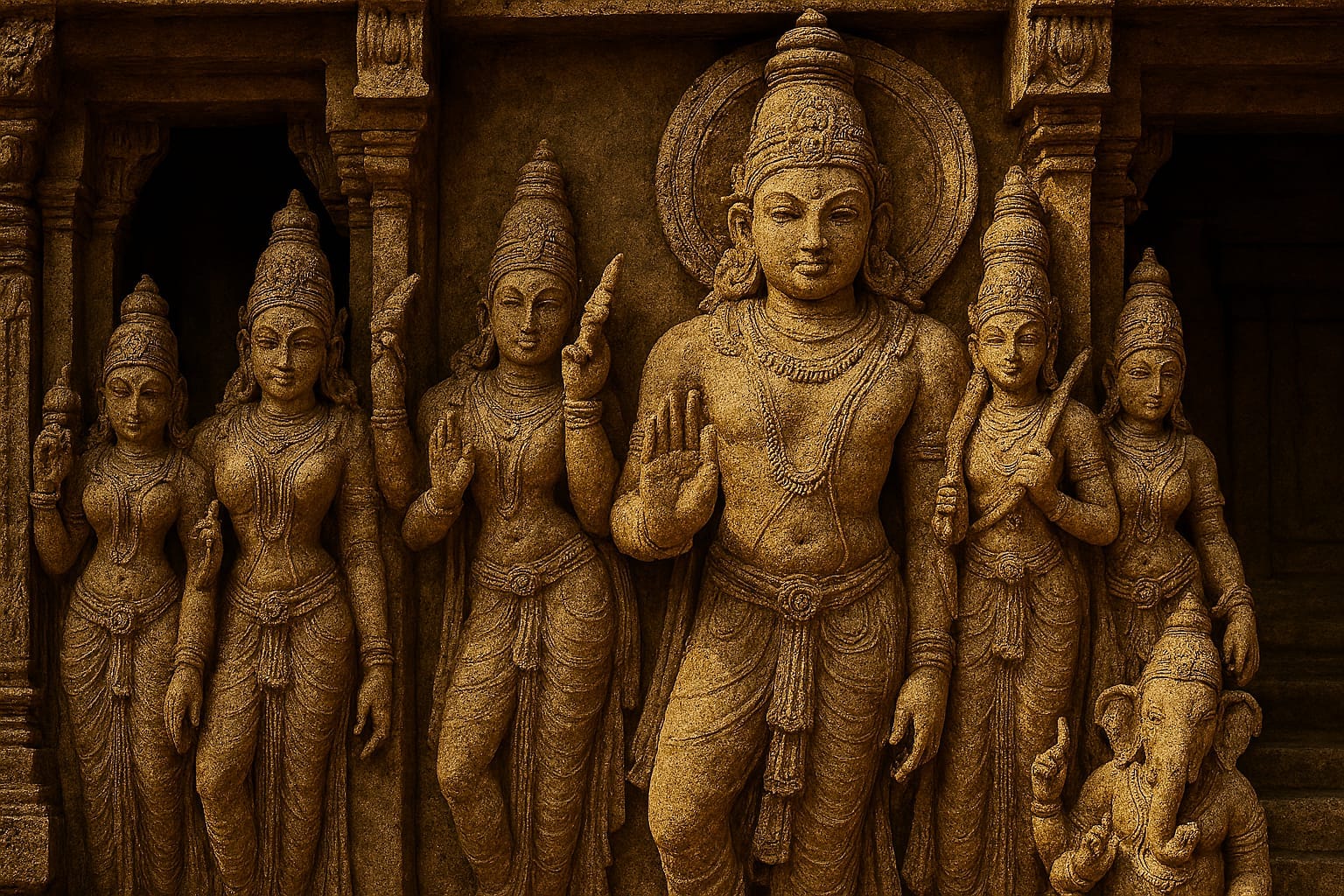
Keezhadi isn’t over. Excavations continue. More stories will emerge. But here’s what we already know: Tamil didn’t begin in the classroom. It began in the dust, the clay, the fire, and the soul.
And now it continues in your voice.
So, whether you’re a parent teaching your child their first Tamil rhyme, or an adult reconnecting with your roots, remember this:
You are not learning a language. You are relighting legacy.
And with platforms like Amarkosh, that legacy is just a click away.
Let Keezhadi remind us not just of who we were, but of who we still are!
Tamils with a story worth speaking, in a language worth learning!
