
The History of Sanskrit: The Root of Indian Languages

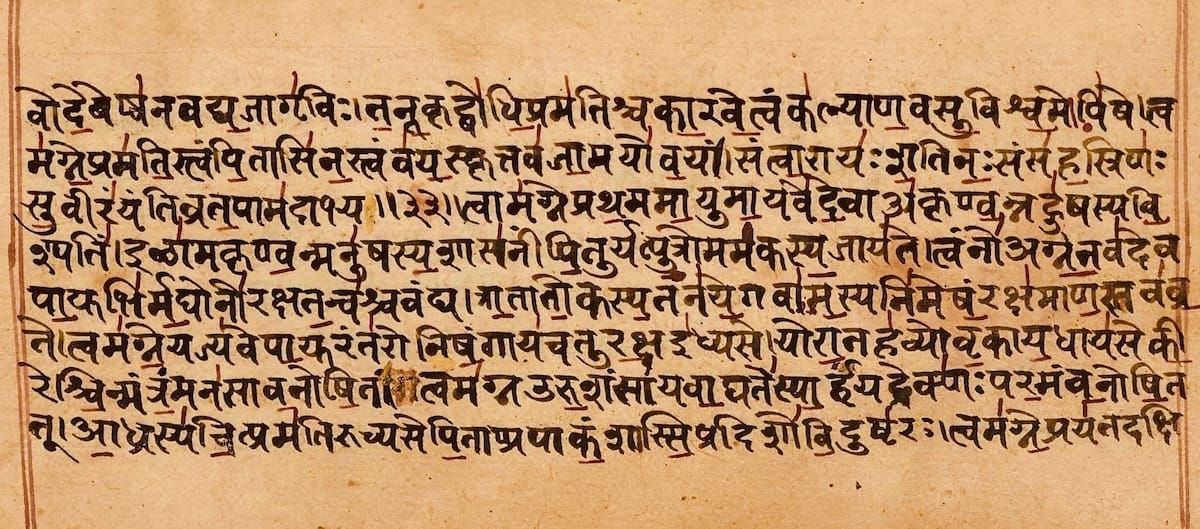
The evolution of Indian languages has been a bit like human evolution itself: not linear, but rather like a complex tapestry that criss-crosses, doubles back and is deeply interconnected. One language that tends to run like a skein through it all is Sanskrit. Often called "the mother of languages," Sanskrit (संस्कृतम्, Saṃskṛtam), it is a vital link for the linguistic and cultural heritage in India today, and has been literally for thousands of years. If the world now looks for Sanskrit tutors, it is for many reasons... not just to study an obscure or ancient classical language.
Sanskrit has shaped many regional Indian languages over the ages. More recently, it has also become relevant for global knowledge systems and linguistics studies in the West. So why is this ancient language important even today? Why is it still routinely taught in Indian schools, and why do people want to learn Sanskrit all over the world?
Sanskrit is precise, clear and and timeless. Its grammar is logical, structured, and almost mathematical in its structure. It has remained constant and has acted as a bridge between the past and present. It marries ancient tradition with modern understanding. The West discovered Eastern spirituality, embraced mindfulness practices like yoga, and has now developed a keen interest in Sanskrit as well. And now technology has made it easy for to access this ancient treasure. Thanks to this 24x7 connected world, anyone can learn Sanskrit from virtually from anywhere in the world. Yes, it is an ancient classical language, but it is also a living, breathing bit of contemporary culture as Sanskrit learners soon discover.
What is Sanskrit?
Sanskrit, (literally meaning "refined" or "well-formed") is one of the oldest known languages, known to be about 3,500 years old. Sanskrit wasn’t just a spoken language but also a literary and liturgical one. While in the past it was a language of the religious, literary and political elite, it is largely democratised today. Its clarity and systematic grammar set up by the legendary grammarian Pāṇini (who lived in the 4th or 5th century BC), makes it sui generis among world languages.
If you want to know how to learn Sanskrit, help is at hand. The grammar does seem daunting initially, but with structured lessons from an online Sanskrit teacher, even beginners can appreciate its elegance and logic. Sanskrit belongs to the Indo-European language family and shares its roots with Latin, Greek, and Persian. Today, Sanskrit uses Devanāgarī (देवनागरी) script in common with several other Indian languages; however, historically, Sanskrit texts were written in various scripts like Brahmi, Grantha, Telugu, and Malayalam.
A Brief History of Sanskrit
The Vedic Period
The earliest form of Sanskrit or Vedic Sanskrit, first emerged around 1500 BCE. This is when Hindu sacred texts consisting of ancient hymns, the Vedās (वेद), first came into being. These hymns consist of rituals, stories, information on ways to live life and more. India's rich oral tradition meant that these were passed down orally from one generation to the next for centuries. The four Vedas were composed in a language rich with poetic and philosophical depth. The Rigveda, for instance, isn't just a religious text; it also tells us about early Indian society, its philosophy, social structures, and cultural values.
Classical Sanskrit
In his monumental work, the Aṣṭādhyāyī (अष्टाध्यायी meaning eight chapters) Panini codified Sanskrit and gave it its classical form. The grammar text was written around the 4th century BCE; and today it is a testament to the language's staying power. Sanskrit has been the medium for Indian mythology, its stories, its liturgy and philosophy. Epics like the Mahābhārata (महाभारत) and Rāmāyaṇa (रामायण), philosophical treatises as well as works like Kālidāsa’s Shakuntalā found expression in Sanskrit.
Sanskrit was also a link language; a lingua franca for scholars and rulers across the Indian subcontinent. If you are someone who wants to know more not just about Sanskrit, but also about India's past, online Sanskrit private lessons may be the way to go. You can dive into not just the spoken word and written grammar, but also connect with the very texts and traditions that shaped ancient India.
How Sanskrit Shaped Indian Languages
Sanskrit remained a constant influence as more and more regional Indian languages evolved over the ages. Prākṛta or Praakrit (प्राकृत), which was a sort of ancient precursor to the way we use Hindi today, was also deeply intertwined with Sanskrit. Over time, the Prakrit group of languages (Prakrits) evolved into modern languages such as Hindi, Bengali, Marathi, Kannada, and Telugu. These modern languages still use a lot of Sanskrit-derived vocabulary.
For instance, the Hindi word for "knowledge," Jñāna (ज्ञान), comes directly from Sanskrit. Similarly we use words like
· 'नमस्ते' (form of greeting)
· 'अन्न' (food),
· 'जल' (water)
· 'मातृ' (mother)
· 'पितृ' (father)
· 'विद्यालय' (school)
· 'सत्य' (truth)
· ‘मित्र:’ (friend)
· ‘पवन’ (air or breeze)
in everyday conversations
So by learning Sanskrit, you also gain a unique advantage when studying other Indian languages. Learn Sanskrit online, and you will find surprising similarities with these modern tongues, particularly their vocabulary.
The Global Impact of Sanskrit
Sanskrit hasn't just influenced Indian culture and knowledge systems. Ancient Sanskrit texts on mathematics, astronomy, medicine, and philosophy also influenced global thought. For instance, the concept of zero (शून्य, Śūnya) and even some trigonometry theories spread across the world through Sanskrit works.
The way in which Sanskrit is structured has intrigued modern linguists and computer scientists. The grammatical framework has been likened to programming languages because of how precise and logical it is. This ancient language is even sparking interest in people working in artificial intelligence! With the guidance of an online Sanskrit tutor, the supposed complexities of Sanskrit become easy even if you speak no other Indian language.
Sanskrit Today: A Living Language
Unlike some other classical languages, Sanskrit is not a "dead" language. In India, Sanskrit 'shlokas' (chants) are recited for Hindu festivals and rituals, Buddhist chants and more. Indian institutions such as Rashtriya Sanskrit Sansthan, as well as universities all over the world, now offer courses in Sanskrit. Digital platforms make it ever easier to learn Sanskrit online. Now, anyone can learn Sanskrit one-on-one from an experienced Sanskrit teacher.
At Amarkosh, we believe Sanskrit is more than just a language; we think of it as a it’s a gateway to India’s cultural and intellectual heritage. Through personalised online Sanskrit private lessons, our expert tutors make the learning journey both engaging and rewarding.
Why Learn Sanskrit?
Learning Sanskrit may seem difficult, but it can be very rewarding in the way that it gives one cultural and social insights into India and its past. You don't just learn a language, you find out a bit about history and about the culture of this great land. Sanskrit is a portal to a vast intellectual and spiritual tradition that continues to fascinate the West.
Cultural Insight: Sanskrit was the vehicle for generations to discover the Vedas and Upanishads, to epic stories like the Mahābhārata and Rāmāyaṇa. Some of the most treasured literary works were composed in Sanskrit. These offer timeless wisdom, muse on profound reflections on life, morality, and human nature. Learning Sanskrit with a truly good online Sanskrit teacher can be like delving into the soul of a civilisation.
Linguistic Foundation: Since so many Indian languages draw from Sanskrit, you will find Sanskrit words cropping up in Hindi, Bengali, Gujarati, Marathi and even the ancient South Indian languages. There are also parallels with other languages from the Indo-European family, such as German and Latin. On the face of it, Sanskrit seems to have nothing in common with these languages, but linguists disprove this comprehensively.
Intellectual Growth: Sanskrit’s grammar, with its logic and precision, can actually help to train the mind the think in these precise ways. Some believe that studying its structure is a little like solving complex puzzles, making it an excellent exercise for mental sharpness and creativity. In fact, learning any new language is known to improve cognitive ability - why not take a look at other personalised online language classes, not just Sanskrit?
Modern Relevance: If practices like yoga, meditation, and Ayurveda interest you, Sanskrit will as well. These aren’t just here-today-gone-tomorrow trends; they are a prescription for living life itself. Learning Sanskrit means you can learn about these practices in their authentic form and gain more from them. Why and how to chant a mantra, understanding a philosophical concept, the correct way to perform a yoga posture, what natural medicine works and how.... Sanskrit breathes life into modern spirituality.
Technological Accessibility: Today, with Sanskrit tutors and digital platforms available literally with a click of the mouse or a tap of your finger, studying Sanskrit has moved out of physical classrooms. New teaching aids, learning apps and personlised attention from a Sanskrit teacher can help to learn the language along with all its nuances with ease.
Ready to start your journey? Visit us and connect with a tutor today. Learn Sanskrit and explore the timeless legacy that it represents - all at once! Begin your linguistic adventure with Amarkosh today!
